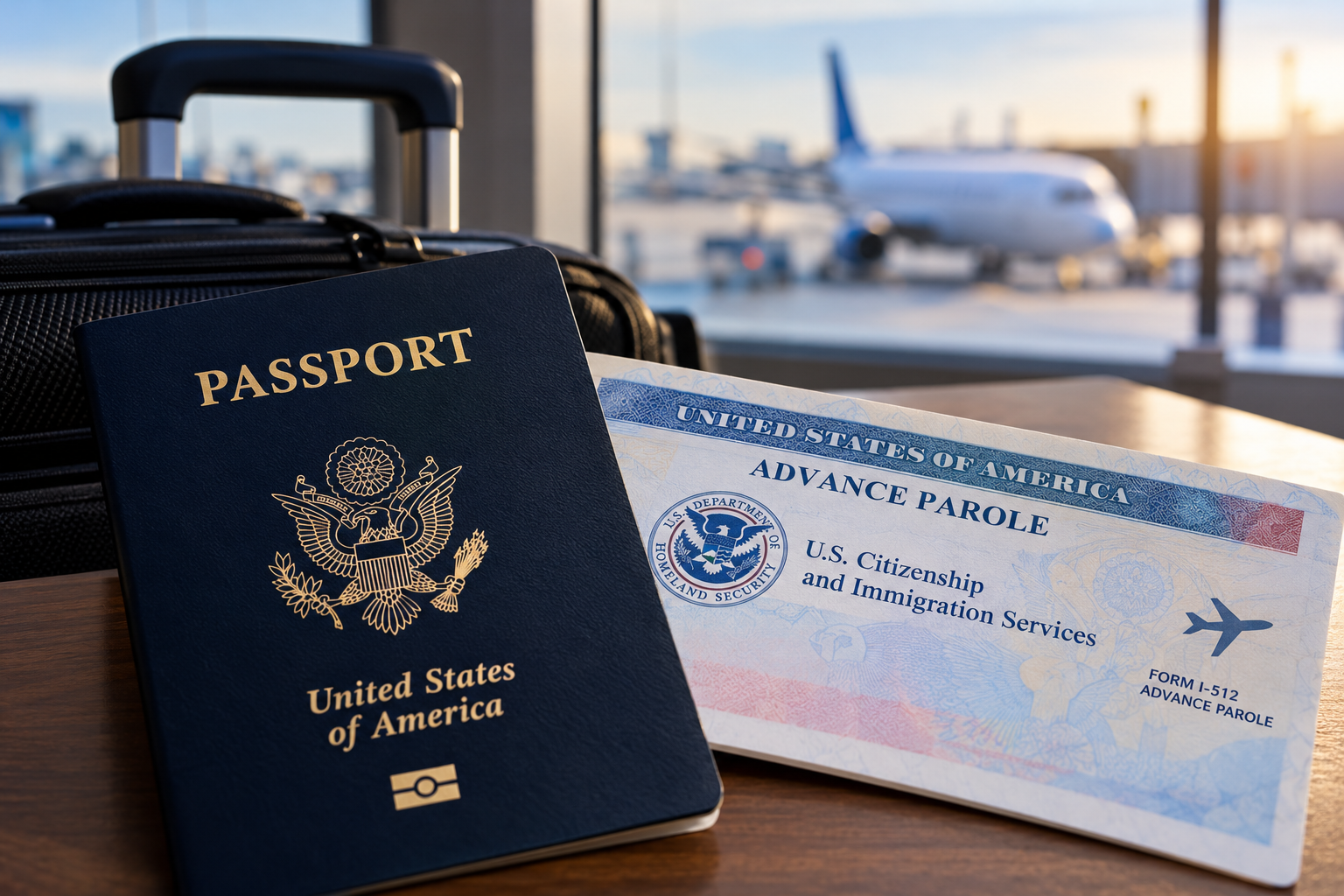
Can DACA Advance Parole Help With Adjustment of Status? What Changed in 2026
For years, advance parole has been an important immigration tool for some DACA recipients who originally entered the United States without inspection.
The reason is relatively straightforward.
Most applicants seeking adjustment of status under INA Section 245(a) must establish that they were inspected and admitted or inspected and paroled into the United States.
A person who originally crossed the border without inspection generally does not satisfy that requirement simply because USCIS later granted DACA.
However, a DACA recipient who receives advance parole, travels outside the United States with permission, and is subsequently paroled back into the country may satisfy the “inspected and paroled” requirement of INA Section 245(a).
For some DACA recipients—particularly those married to U.S. citizens—that has historically created a potential path to adjustment of status from inside the United States.
But in 2026, an important new Board of Immigration Appeals decision dramatically changed one part of that analysis.
On August 13, 2026, the Board issued Matter of Delcarmen-Lara and overruled Matter of Arrabally and Yerrabelly, a case immigration practitioners had relied on for more than a decade when evaluating unlawful presence and advance parole.
As a result, DACA recipients considering advance parole now need to evaluate not only whether returning on parole may help satisfy the adjustment-of-status entry requirement, but also whether leaving the United States could trigger a separate ground of inadmissibility based on unlawful presence.
KEY TAKEAWAYS
- DACA itself does not constitute an admission, parole, or lawful immigration status.
- A DACA recipient may request advance parole for qualifying humanitarian, educational, or employment purposes.
- If the DACA recipient travels with advance parole and CBP paroles the person back into the United States, that parole may satisfy the inspected-and-paroled requirement of INA Section 245(a).
- This can be especially important for certain immediate relatives of U.S. citizens who originally entered the United States without inspection.
- However, advance parole does not automatically make someone eligible for a Green Card.
- On August 13, 2026, Matter of Delcarmen-Lara overruled Matter of Arrabally and Yerrabelly and held that travel pursuant to advance parole can constitute a “departure” that triggers the unlawful-presence bars.
- DACA recipients who accrued significant unlawful presence before receiving DACA—or during gaps in DACA—should therefore carefully analyze the consequences before traveling.
- A prior removal order, criminal history, fraud or misrepresentation, prior unlawful entries, or other immigration issues can create additional risks that advance parole does not solve.
Why Can Advance Parole Matter for Adjustment of Status?
The starting point is INA Section 245(a).
With limited exceptions, a person seeking adjustment of status must have been inspected and admitted or inspected and paroled into the United States.
A DACA recipient who originally entered the United States without inspection generally cannot satisfy that requirement merely because DACA was later granted.
DACA is deferred action. It does not itself constitute lawful immigration status, admission, or parole.
But if USCIS grants advance parole and the DACA recipient travels abroad and is subsequently paroled into the United States by CBP, the person may then have an entry that satisfies the inspected-and-paroled requirement under INA Section 245(a).
A Common Example: DACA Recipient Married to a U.S. Citizen
Consider a person who entered the United States without inspection as a child, later received DACA, and is now married to a U.S. citizen.
The marriage to a U.S. citizen may provide an immediate-relative basis for permanent residence.
But if the person was never admitted or paroled, INA Section 245(a) may prevent adjustment of status from inside the United States.
If that person obtains advance parole, travels for an approved purpose, and is paroled back into the United States, the new parole entry may satisfy that particular requirement.
Because immediate relatives of U.S. citizens are also exempt from certain adjustment bars involving failure to maintain lawful status and unauthorized employment, a person who returns on parole may, depending on the rest of the immigration history, become eligible to seek adjustment of status through the U.S. citizen spouse.
But satisfying the parole requirement does not mean the entire case is automatically approvable.
The applicant must still be admissible and must satisfy all other requirements for adjustment of status.
What Types of Travel Can Qualify for DACA Advance Parole?
USCIS may grant advance parole to a DACA recipient for certain educational, employment, or humanitarian purposes.
Humanitarian Purposes
Examples may include traveling to obtain medical treatment, attending funeral services for a family member, or visiting a seriously ill relative.
Educational Purposes
Examples can include study-abroad programs, academic research, or other legitimate educational travel.
Employment Purposes
Examples may include overseas work assignments, professional conferences, training, interviews, or meetings with clients.
USCIS specifically states that travel solely for vacation is not a sufficient basis for DACA advance parole.
The request is discretionary and generally requires Form I-131 together with evidence establishing the legitimate reason for the proposed travel.
Advance Parole Does Not Guarantee That You Will Be Allowed Back Into the United States
This is another important limitation.
Approval of an advance parole document does not guarantee that CBP will parole the traveler back into the United States.
When the person returns to a port of entry, CBP conducts an inspection and determines whether parole will actually be granted.
USCIS’s Form I-131 instructions specifically warn that a person returning with advance parole is subject to inspection and that the advance parole document itself does not create an absolute right to reenter.
That is why a person’s entire immigration and criminal history should be reviewed before international travel.
DID YOU KNOW? Approval of advance parole does not guarantee that you will be allowed back into the United States.
Advance parole gives a DACA recipient permission to travel and present himself or herself for inspection at a U.S. port of entry.
When the person returns, U.S. Customs and Border Protection still conducts an inspection and decides whether the traveler will be paroled into the United States.
This is why advance parole should not be treated as a routine travel document.
Before leaving the United States, a DACA recipient should review the entire immigration history, including prior entries and departures, any removal or immigration court history, criminal history, periods without DACA, and any other issue that could affect the person's ability to return.
The safest time to identify a reentry problem is before leaving the United States—not at the airport or border on the way back.
How Can Someone Have DACA and Still Have Unlawful Presence?
This is one of the most important questions after Matter of Delcarmen-Lara.
DACA and unlawful presence are not the same thing.
While a valid period of DACA generally prevents additional unlawful presence from accruing, DACA does not erase unlawful presence that was accumulated before the grant of deferred action.
For example, a person who entered the United States as a child may have begun accruing unlawful presence after turning 18 and may not have received DACA until months or years later.
Another person may have experienced a gap between periods of DACA and accumulated additional unlawful presence during that gap.
By contrast, a person who obtained DACA before beginning to accrue significant unlawful presence may have a very different analysis.
This is why two DACA recipients who appear to have similar immigration histories may face completely different consequences from the same advance-parole trip.
What Did Matter of Delcarmen-Lara Actually Change?
Before August 13, 2026, Matter of Arrabally and Yerrabelly generally provided that travel pursuant to advance parole was not treated as a departure for purposes of the three-year and ten-year unlawful-presence bars in INA Section 212(a)(9)(B).
Matter of Delcarmen-Lara changed that rule.
The Board concluded that the statute does not contain an exception for travel made pursuant to advance parole and expressly overruled Arrabally and Yerrabelly.
The Board also recognized that this was a substantial change in the law and therefore stated that its new holding would apply prospectively.
The respondent in Delcarmen-Lara had traveled under advance parole in January 2024. Because the Board applied the new rule prospectively, it did not hold that her earlier trip triggered the unlawful-presence bar.
For DACA recipients considering travel after the August 2026 decision, however, the old Arrabally rule should no longer be assumed to protect the departure.
Does Advance Parole Still Help With the INA 245(a) Entry Requirement?
Potentially, yes.
The new decision addresses whether leaving the United States with advance parole constitutes a “departure” for purposes of the unlawful-presence inadmissibility provisions.
That is a different question from whether a person who is actually paroled into the United States satisfies the “inspected and admitted or paroled” requirement of INA Section 245(a).
A qualifying parole into the United States can still be significant for a person who originally entered without inspection.
The problem is that the same trip that creates a qualifying parole entry may now also trigger an unlawful-presence ground of inadmissibility if the traveler accumulated sufficient unlawful presence before departing.
That means the analysis now has at least two separate steps:
- Will returning on parole satisfy the INA Section 245(a) entry requirement?
- Will leaving the United States trigger a ground of inadmissibility under INA Section 212(a)(9)(B) or another provision?
An applicant needs favorable answers to both questions—or a legally available waiver or exception—before assuming that the trip will create a viable adjustment case.
What About Someone Who Has Never Accrued 180 Days of Unlawful Presence?
That may be a materially different case.
The three-year and ten-year bars under INA Section 212(a)(9)(B) depend on the amount of unlawful presence accumulated before departure.
A DACA recipient who received deferred action before accumulating 180 days of unlawful presence may not trigger those particular bars simply by departing.
However, that does not automatically mean travel is safe.
Other grounds of inadmissibility, prior removal orders, prior unlawful entries, criminal history, fraud or misrepresentation, and other immigration issues must still be reviewed.
What If the DACA Recipient Has a Prior Removal Order?
This requires particular caution.
A person with a prior exclusion, deportation, or removal order should not assume that advance parole eliminates the consequences associated with that order.
Departure from the United States while a removal order remains outstanding can have significant immigration consequences that are separate from the ordinary unlawful-presence analysis.
USCIS has historically warned DACA recipients with prior removal orders to obtain individualized legal advice and address the immigration proceedings before departing the United States.
Advance parole should therefore never be viewed as a simple mechanism for “fixing” an entry without first determining whether the person has any prior order or other immigration enforcement history.
What Other Problems Does Advance Parole Not Fix?
Advance parole is not a waiver of every immigration violation.
Depending on the person’s history, separate issues may include:
- fraud or misrepresentation;
- a false claim to U.S. citizenship;
- criminal grounds of inadmissibility;
- prior removal or deportation orders;
- multiple unlawful entries;
- INA Section 212(a)(9)(C) inadmissibility;
- immigration smuggling issues;
- prior visa or immigration fraud; and
- other grounds of inadmissibility.
Returning through advance parole does not automatically erase those issues.
So, Can DACA Advance Parole Still Help With Adjustment of Status in 2026?
Yes, in the right case.
For a DACA recipient who originally entered without inspection, a later parole into the United States can potentially satisfy an important requirement for adjustment of status.
But the analysis changed substantially in August 2026.
Before Matter of Delcarmen-Lara, many applicants could rely on Matter of Arrabally and Yerrabelly when determining whether travel under advance parole would trigger the unlawful-presence bars.
That protection can no longer simply be assumed for future travel.
The applicant should determine how much unlawful presence has been accumulated, whether another ground of inadmissibility applies, whether there is a prior removal order, and whether the person would otherwise qualify for adjustment of status after returning.
Advance parole can still create an important immigration opportunity, but in 2026 it should not be used as a strategy for adjustment of status without first analyzing the consequences of the departure itself.
This article reflects USCIS guidance and Board of Immigration Appeals precedent available as of October 4, 2026.
How GS LAW Can Help
DACA advance parole can still be an important part of an adjustment-of-status strategy, but the August 2026 change in the law makes individualized review especially important before international travel.
GS LAW, APC can evaluate whether advance parole may help satisfy the inspection-and-parole requirement for adjustment of status and whether leaving the United States could trigger an unlawful-presence bar or another ground of inadmissibility.
Our review can include the applicant’s manner of entry, age and immigration history, periods of unlawful presence, DACA history and any gaps in deferred action, prior removal proceedings, prior entries and departures, criminal history, family-based immigration eligibility, and potential waiver issues.
For applicants married to U.S. citizens, we can also evaluate whether a parole entry would resolve the INA Section 245(a) issue and whether the applicant would otherwise qualify to file Form I-485 after returning to the United States.
If you have DACA and are considering advance parole as part of a potential adjustment-of-status case, contact GS LAW, APC to schedule an immigration consultation before traveling outside the United States.