Adjustment of status is changing in 2026. Family-based I-485 cases...
Read MoreIMMIGRATION LAW / RESOURCE GUIDE
The Complete Guide to Form I-130, Petition for Alien Relative
Eligibility, Forms, and the Process
A practical guide to understanding who may qualify, what may create problems, and what happens during the application process.
Written and legally reviewed by:
Gabriel Sandoval, Attorney at Law
GS LAW, APC
Last reviewed: August 2, 2026
Disclaimer: This guide is provided for general informational purposes only and does not constitute legal advice. Immigration laws and policies change frequently. For advice about your specific situation, consult a qualified immigration attorney.
IN THIS GUIDE
Our Recent Immigration Law Articles

Fiancé Visa Versus Marriage Visa: Which One is Right for You?
Deciding between a fiancé visa (K-1) and a marriage visa...
Read More
DACA Renewal: Act Now Before Policies Change
Don’t wait to renew your DACA. With potential policy changes...
Read More1. What Is Form I-130?
Form I-130, Petition for Alien Relative, is filed with U.S. Citizenship and Immigration Services (USCIS) to establish that a qualifying family relationship exists between the petitioner and the foreign national beneficiary.
Approval of Form I-130 does not by itself grant a green card, lawful immigration status, employment authorization, or permission to enter the United States. Instead, approval establishes the family relationship and allows the beneficiary to proceed to the next stage of the immigration process when eligible.
Not a Green Card
An approved I-130 establishes the qualifying family relationship. The beneficiary must still complete Adjustment of Status or Consular Processing before becoming a permanent resident.
Why It Is Required
USCIS uses Form I-130 to determine whether the petitioner and beneficiary have a legally recognized family relationship that qualifies under U.S. immigration law.
Who It Is For
USCIS uses Form I-130 to determine whether the petitioner and beneficiary have a legally recognized family relationship that qualifies under U.S. immigration law.
Processing Times
I-130 processing times vary based on the relationship, filing circumstances, USCIS workload, and other factors. Approval may also be only the first part of a much longer process for relatives who must wait for an immigrant visa to become available.
2. Who Can File an I-130 Petition?
The relatives a person may petition for depend primarily on whether the petitioner is a U.S. citizen or lawful permanent resident. The petitioner must establish both his or her immigration status and the qualifying relationship to the beneficiary.
U.S. Citizen
A U.S. citizen may generally file Form I-130 for a:
• Spouse;
• Unmarried child under 21;
• Unmarried son or daughter age 21 or older;
• Married son or daughter;
• Parent, if the petitioner is at least 21 years old; or
• Brother or sister, if the petitioner is at least 21 years old.
Lawful Permanent Residents
A lawful permanent resident may petition for a:
• Spouse;
• Unmarried child under 21; or
• Unmarried son or daughter age 21 or older.
A permanent resident cannot petition for a married son or daughter, parent, or sibling.
Qualifying Relationship Required
Filing the form is not enough. The petitioner must prove the claimed family relationship through documents such as birth certificates, marriage certificates, adoption records, or other legally recognized evidence.
3. Who Can Be the Beneficiary?
One of the most important concepts in family immigration is the distinction between immediate relatives and family-preference relatives.
The category determines whether an immigrant visa is immediately available or whether the beneficiary must wait for a priority date to become current.
Immediate Relatives — No Visa-Number Wait
Immediate relatives of U.S. citizens are not subject to the annual numerical limits that apply to family-preference categories.
Immediate relatives include:
Spouse of a U.S. Citizen
A legally recognized husband or wife of a U.S. citizen.
Unmarried Child Under 21 of a U.S. Citizen
The beneficiary must generally remain unmarried and qualify as a “child” under U.S. immigration law.
Parent of a U.S. Citizen
The U.S. citizen petitioner must be at least 21 years old.
Family-Preference Categories — Visa Availability Required
Family-preference petitions are subject to annual immigrant-visa limits. Filing or even obtaining approval of the I-130 does not necessarily mean the beneficiary can immediately apply for permanent residence.
F1
Unmarried sons and daughters, age 21 or older, of U.S. citizens.
F2A
Spouses and unmarried children under 21 of lawful permanent residents.
F2B
Unmarried sons and daughters, age 21 or older, of lawful permanent residents.
F3
Married sons and daughters of U.S. citizens.
F4
Brothers and sisters of U.S. citizens who are at least 21 years old.
4. How the 130 Process Works
Although every case is different, most family petitions follow the same basic process. The biggest difference is what happens after filing: immediate relatives generally have an immigrant visa immediately available, while preference-category beneficiaries may have to wait.
Agencies Involved in the Process
- U.S. Citizenship and Immigration Services (USCIS)
- National Visa Center (NVC)
- U.S. Embassy
File I-130
You submit the petition and evidence with USCIS.
Receipt Notice
USCIS sends a Receipt Notice with your case number.
USCIS Review
USCIS reviews your petition.
Approval
USCIS issues an approval notice after determining that the qualifying family relationship has been established.
AOS or Consular Processing
Adjustment of Status if the beneficiary is in the United States and eligible to adjust; or NVC and Consular Processing if the beneficiary will apply for an immigrant visa abroad.
AT A GLANCE
Immediate Relatives
No visa wait
- Spouse of U.S. Citizen
- Unmarried child under 21 of U.S. Citizen
- Parent of U.S. Citizen (petitioner over 21)
HOW IT WORKS
In the U.S. and eligible?
May be able to file I-130 + I-485 concurrently
Abroad?
After I-130 Approval ➔ NVC ➔ Interview ➔ Immigrant Visa
Why this matters
Your category affects how quickly your case can move forward, whether you can file applications at the same time, and what steps come next. Understanding the difference helps you plan realistically and avoid unnecessary delays.
Preference Categories
Must wait for visa availability
Family-preference cases include:
F1
Unmarried sons and daughters (21+) of U.S. Ciitizens
F2A
Spouse and children of lawful permanent residents
F2B
Unmarried sons and daughters (21+) of LPRs
F3
Married sons and daughters of U.S. Citizens
F4
Brothers and sisters of U.S. Citizens
HOW IT WORKS
1.
File I-130
2.
Receive Priority Date
3.
Wait for Visa Bulletin
4.
Adjustment of Status or Consular Processing
5. Required Forms and Documents
The exact evidence depends on the family relationship involved. USCIS requires documents establishing the petitioner’s status and proving the relationship claimed in the petition.
Form I-130, Petition for Alien Relative
The petitioner must complete Form I-130 accurately and provide information about both the petitioner and beneficiary, including the nature of their relationship and the beneficiary’s immigration history.
Form I-130A, Supplemental Information for Spouse Beneficiary
When Form I-130 is filed for a spouse, the beneficiary must generally complete Form I-130A, Supplemental Information for Spouse Beneficiary. A spouse living abroad must still complete Form I-130A, although USCIS does not require the overseas spouse to sign it.
Proof of U.S. Citizenship or Permanent Residence
Evidence may include a U.S. birth certificate, U.S. passport, Certificate of Naturalization, Certificate of Citizenship, or proof of lawful permanent residence.
Birth Certificates
Birth certificates are commonly used to establish parent-child and sibling relationships. The particular documents required depend on who is petitioning for whom.
Marriage Certificate
A petition for a spouse must include evidence establishing a legally valid marriage.
Termination of Previous Marriages
If either spouse was previously married, include proof that each prior marriage legally ended through a final divorce judgment, annulment, or death certificate.
Evidence of a Bona Fide Marriage
A marriage-based I-130 should include evidence showing that the couple entered the marriage in good faith rather than solely to obtain an immigration benefit.
Evidence may include:
- Joint bank or financial accounts;
- Joint leases or mortgages;
- Joint ownership of property;
- Insurance policies;
- Joint tax documents;
- Birth certificates of children;
- Photographs together;
- Travel records;
- Correspondence and communications; and
- Affidavits from people familiar with the relationship.
USCIS specifically recognizes joint property, joint residence, combined finances, children, affidavits, and other evidence of an ongoing marital union as potential proof of a bona fide marriage.
Certified English Translations
Documents written in a language other than English should be submitted with a complete English translation and the required translator certification.
6. Common Problems
Several issues can delay an I-130 petition or result in a Request for Evidence.
Missing or Insufficient Evidence
USCIS must be able to verify the qualifying family relationship. Missing birth certificates, incomplete marriage records, or insufficient supporting evidence can delay adjudication.
Insufficient Evidence of a Bona Fide Marriage
Marriage petitions frequently receive additional scrutiny when there is little documentation demonstrating a shared life together.
Previous Marriages & Divorce Issues
USCIS may request additional evidence when divorce judgments are incomplete, not final, inconsistent, or unavailable.
Inconsistent Information
Differences between the I-130, prior immigration applications, birth certificates, marriage records, addresses, employment histories, or other documents can lead to additional questions.
Relationship Does Not Qualify
Not every family relationship allows an I-130 petition. For example, a person generally cannot file an I-130 directly for a grandparent, grandchild, aunt, uncle, cousin, niece, or nephew.
Preference-Category Waiting Periods
Approval of the I-130 does not eliminate the visa waiting period. Preference beneficiaries must continue monitoring the Visa Bulletin until their case may proceed.
7. Frequently Asked Questions
Form I-130 raises many practical questions about eligibility, processing times, priority dates, Adjustment of Status, Consular Processing, and what happens while the petition is pending. The answers below address some of the most common questions asked by U.S. citizens, lawful permanent residents, and family members going through the family-based immigration process.
Does an approved I-130 mean I have a green card?
No. Approval establishes the qualifying family relationship. The beneficiary must still complete Adjustment of Status or Consular Processing.
Can I file Form I-130 and Form I-485 at the same time?
Often, yes, for an immediate relative of a U.S. citizen who is in the United States and otherwise eligible for Adjustment of Status. Preference-category beneficiaries may file only when visa availability and USCIS filing rules permit.
Can I stay in the United States because an I-130 is pending?
Not simply because the I-130 was filed. A pending or approved I-130 does not itself provide lawful immigration status.
Can I work because my I-130 was approved?
No. Form I-130 by itself does not provide employment authorization.
What is a priority date?
For most family-preference petitions, the priority date is based on the date the I-130 was properly filed. It determines the beneficiary’s place in line for an immigrant visa.
What is the Visa Bulletin?
The Department of State publishes the Visa Bulletin each month showing visa availability for numerically limited family-preference categories. The applicable dates depend on the beneficiary’s category and, in some cases, country of chargeability.
Do immediate relatives have to check the Visa Bulletin?
Generally, no. Immigrant visas for immediate relatives of U.S. citizens are not subject to the family-preference numerical limits.
What happens if a permanent resident petitioner becomes a U.S. citizen?
Naturalization may change the beneficiary’s immigration category. For example, a spouse or qualifying child of a permanent resident may become an immediate relative after the petitioner naturalizes. The effect depends on the particular relationship and circumstances.
Do I need a separate I-130 for each family member?
Immediate relatives generally require separate petitions for each qualifying relative. In family-preference cases, a principal beneficiary’s spouse and unmarried children may sometimes qualify as derivative beneficiaries without separate petitions.
Can I file an I-130 for my fiancé(e)?
Not unless you are already legally married. A U.S. citizen seeking to bring a foreign fiancé(e) to the United States to marry generally uses Form I-129F and the K-1 visa process.
Can I change from Consular Processing to Adjustment of Status, or vice versa?
Yes, but the procedure depends on where the case is pending and whether the beneficiary is actually eligible for Adjustment of Status.
If the I-130 is still pending, the petitioner should notify USCIS of changes in the beneficiary’s location or intended method of processing. If USCIS has already approved the I-130 and retained it for Adjustment of Status, but the beneficiary later needs Consular Processing, the petitioner may have to file Form I-824 to request that USCIS send the approved petition to the National Visa Center.
Changing the intended processing method does not by itself make someone eligible for Adjustment of Status. The beneficiary must independently satisfy the requirements for adjustment.
What happens if the petitioner and beneficiary divorce while a spousal I-130 is pending?
A spousal I-130 requires a valid qualifying marriage. If the petitioner and beneficiary legally divorce while the petition is pending, the qualifying relationship no longer exists and USCIS will generally deny the petition.
Similarly, if the I-130 has already been approved but the couple divorces before the beneficiary becomes a permanent resident, the approved petition generally can no longer support immigration as the petitioner’s spouse.
What happens if the petitioner dies after filing or after approval?
The death of the petitioner does not always end the immigration case, but the rules are complicated and depend heavily on the family relationship, where the beneficiary lives, and whether the petition was pending or already approved.
A surviving spouse of a U.S. citizen may qualify for immigration as a widow or widower, and USCIS may automatically convert a qualifying spousal I-130 into a widow(er) petition. In other family cases, relief may sometimes be available under INA §204(l) or through humanitarian reinstatement of an approved I-130. Because these rules are highly fact-specific, beneficiaries should obtain legal advice before assuming that the case has ended.
9. Do You Need an Attorney?
USCIS does not require a petitioner to hire an attorney to file Form I-130. Many straightforward family petitions can be prepared without legal representation. However, some cases involve questions about the qualifying relationship, immigration history, prior marriages, visa availability, Adjustment of Status eligibility, or admissibility that extend beyond simply completing Form I-130.
When Should You Consider Speaking With an Attorney?
Legal assistance may be particularly helpful when:
- The beneficiary entered the United States without inspection;
- The beneficiary overstayed a visa or violated immigration status;
- The beneficiary has prior deportation or removal proceedings;
- Either party has a complicated criminal or immigration history;
- The beneficiary previously provided inaccurate information to immigration officials;
- The marriage occurred during removal proceedings;
- The petitioner or beneficiary has multiple prior marriages;
- There is limited evidence of a bona fide marriage;
- A prior immigration petition was denied;
- USCIS issued a Request for Evidence or Notice of Intent to Deny;
- There are questions involving adoption, stepchildren, legitimation, or parent-child relationships;
- The beneficiary may require a waiver;
- There is uncertainty about whether Adjustment of Status or Consular Processing is appropriate; or
- The family is unsure how the Visa Bulletin affects the case.
How Can an Immigration Attorney Help?
An immigration attorney can review the petitioner’s and beneficiary’s histories, determine the correct immigration category, identify potential eligibility problems, and develop an appropriate filing strategy.
An attorney can also prepare Form I-130 and supporting evidence, evaluate the documentation establishing the family relationship, address prior immigration or criminal issues, respond to USCIS notices, and help the family prepare for the next stage of the case.
An attorney cannot guarantee approval. The attorney’s role is to identify legal and evidentiary issues, explain the available options and risks, and present the strongest accurate case permitted by the facts and the law.the case, including National Visa Center processing, the embassy interview, entry into the United States, marriage within 90 days, and the beneficiary’s Adjustment of Status application. An attorney can respond to an RFE, NOID, or other agency notice and explain the available options if the case is delayed or denied.
An attorney cannot guarantee that USCIS or the Department of State will approve the petition or visa. The attorney’s role is to identify legal and evidentiary concerns, explain the available options and risks, and present the strongest accurate case permitted by the facts and the law.
We’re Here to Help You Bring Your Family Together
Family-based immigration can involve several different paths depending on the petitioner’s status, the family relationship, the beneficiary’s location, and visa availability. Our office assists families with I-130 petitions, Adjustment of Status, Consular Processing, Affidavits of Support, and related family immigration matters.
About the Author
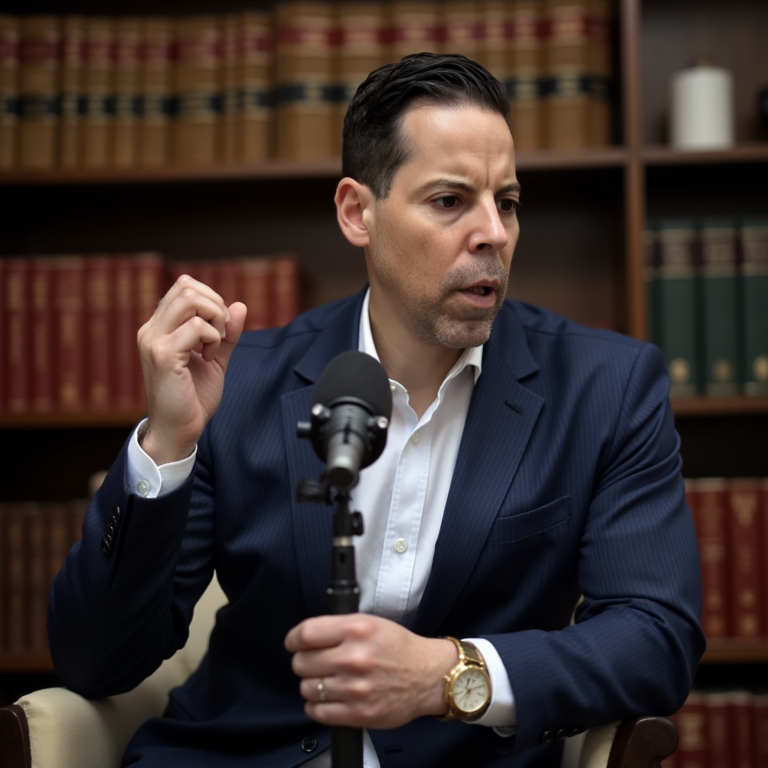
Gabriel Sandoval, Esq.
Owner
GS LAW, APC
Gabriel Sandoval is an immigration attorney with more than 10 years of experience helping individuals and families obtain legal permanent residence in the United States
Questions About Your Family Petition?
We’re here to help you understand your options and build the strongest case possible