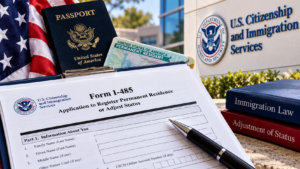
Adjustment of status is changing in 2026. Family-based I-485 cases...
Read MoreIMMIGRATION LAW / RESOURCE GUIDE
The Complete Guide to I-485, Adjustment of Status
Eligibility, Forms, and the Green Card Process
A practical guide to understanding who may qualify, what may create problems, and what happens during the application process.
Written and legally reviewed by:
Gabriel Sandoval, Attorney at Law
GS LAW, APC
Last reviewed: August 2, 2026
Disclaimer: This guide is provided for general informational purposes only and does not constitute legal advice. Immigration laws and policies change frequently. For advice about your specific situation, consult a qualified immigration attorney.
IN THIS GUIDE
- What Is Adjustment of Status?
- Who May Qualify?
- Adjustment of Status Eligibility Requirements
- Entry and Immigration Status
- Bars and Grounds of Inadmissibility
- Marriage- and Family-Based Adjustment
- Adjustment of Status Forms and Evidence
- Filing and What Happens After Filing
- The Adjustment of Status Interview
- Approval, RFE, NOID, and Denial
- Frequently Asked Questions
- Do You Need an Attorney?
Our Recent Immigration Law Articles

Fiancé Visa Versus Marriage Visa: Which One is Right for You?
Deciding between a fiancé visa (K-1) and a marriage visa...
Read More
DACA Renewal: Act Now Before Policies Change
Don’t wait to renew your DACA. With potential policy changes...
Read More1. What Is Adjustment of Status?
Adjustment of status is the process through which an eligible person physically present in the United States applies to become a lawful permanent resident. The principal application is Form I-485, Application to Register Permanent Residence or Adjust Status.
Adjustment of status is different from consular processing. A person applying through consular processing generally completes the immigrant visa process through the Department of State and attends an interview at a U.S. embassy or consulate outside the United States. A person applying for adjustment of status generally remains in the United States while USCIS considers Form I-485.
QUICK ANSWER
A person may qualify for adjustment of status if there is a recognized legal basis for permanent residence, an immigrant visa is available, the applicant satisfies the applicable entry requirements, no adjustment bar applies, and the applicant is admissible to the United States or qualifies for any necessary waiver. These requirements must be considered together. Satisfying one requirement does not necessarily mean that the entire case is eligible for approval.
2. Who May Qualify for Adjustment of Status?
Adjustment of status is available through several immigration categories. Each category has its own requirements, exceptions, and limitations.
Immediate Relatives of U.S. Citizens
The immediate-relative categories generally include:
- The spouse of a U.S. citizen;
- The unmarried child under 21 years of age of a U.S. citizen; and
- The parent of a U.S. citizen who is at least 21 years old.
Immigrant visas are not numerically limited for immediate relatives. This frequently allows the immigrant petition and Form I-485 to be filed together, provided the applicant satisfies the remaining eligibility requirements.
Immediate relatives are also exempt from certain adjustment bars involving unlawful immigration status, unauthorized employment, or failure to maintain status. These exemptions are important, but they do not cure an unlawful entry or every possible ground of inadmissibility.
Family-Preference Immigrants
Family-preference categories include certain:
- Unmarried adult sons and daughters of U.S. citizens;
- Spouses and unmarried children of lawful permanent residents;
- Married sons and daughters of U.S. citizens; and
- Brothers and sisters of adult U.S. citizens.
These categories are subject to annual numerical limits. An applicant generally cannot file or obtain approval of Form I-485 until an immigrant visa is available based on the applicant’s category, priority date, and country of chargeability.
Visa availability can change from month to month. Applicants in preference categories should review the Department of State’s Visa Bulletin and the USCIS chart-designation page before filing.
Other Immigration Categories
Adjustment of status may also be available to certain:
- Employment-based applicants;
- Refugees and asylees;
- Violence Against Women Act self-petitioners;
- T-visa and U-visa beneficiaries;
- Special immigrant juveniles;
- Diversity visa selectees;
- Cuban nationals and qualifying family members;
- Special immigrants; and
- Applicants protected by INA § 245(i).
This guide provides a general family-based framework. A person applying through a humanitarian, employment-based, or special statutory category should review the rules that apply specifically to that category.
3. Adjustment of Status Eligibility Requirements
A complete adjustment-of-status analysis should address the following questions.
1. Is There a Legal Basis for Permanent Residence?
The applicant must qualify under a recognized immigrant category, such as an approved or concurrently filed family-based immigrant petition.
2. Is the Applicant Physically Present in the United States?
Form I-485 is generally used by applicants who are physically present in the United States. A person outside the United States normally completes consular processing instead.
3. Was the Applicant Inspected and Admitted or Paroled?
INA § 245(a) generally requires the applicant to have been inspected and admitted or paroled into the United States. Some specialized immigration categories provide different rules or exceptions.
4. Is an Immigrant Visa Available?
An immigrant visa must generally be immediately available both when Form I-485 is filed and when USCIS approves the application.
A visa is always available to an immediate relative of a U.S. citizen. Family-preference and employment-based applicants may have to wait until their priority dates are current.
5. Does an Adjustment Bar Apply?
An applicant may be barred from adjustment because of unlawful immigration status, unauthorized employment, failure to maintain status, or another statutory restriction. The applicability of a bar depends on the applicant’s immigration category and history.
6. Is the Applicant Admissible?
USCIS examines whether the applicant is inadmissible because of fraud, criminal conduct, unlawful presence, a prior removal, health-related issues, public-charge concerns, smuggling, or another statutory ground.
7. Is an Exception or Waiver Available?
Some legal problems have exceptions or waivers. Others do not. Waiver eligibility may depend on the applicant having a particular qualifying relative and proving the required degree of hardship.
8. Which Agency Has Jurisdiction?
USCIS decides most affirmative adjustment applications. In certain removal proceedings, an immigration judge may have jurisdiction. Special jurisdictional rules apply to arriving aliens and other applicants.
9. Does the Applicant Merit Approval as a Matter of Discretion?
Adjustment of status is generally discretionary. Statutory eligibility does not, by itself, guarantee approval. USCIS may consider the applicant’s entire history, including both favorable and unfavorable circumstances.
Important 2026 Adjustment-of-Status Policy Development
On May 21, 2026, USCIS issued Policy Memorandum PM-602-0199, emphasizing that adjustment of status is discretionary and that officers must evaluate the totality of the applicant’s circumstances.
Applicants should be prepared to address negative factors and document favorable factors rather than treating Form I-485 as a purely mechanical application. The memorandum does not eliminate adjustment of status or replace the requirements established by Congress, but it makes the discretionary portion of the decision particularly important.
Potentially relevant factors may include immigration compliance, the circumstances surrounding the applicant’s entry, prior statements to government officials, criminal history, family relationships, employment history, payment of taxes, community ties, rehabilitation, and other evidence of good character.
4. Entry and Immigration Status
The manner in which a person entered the United States is often one of the most important adjustment-of-status issues.
Inspection and Admission
A person is generally admitted after presenting at a port of entry, being inspected by an immigration officer, and receiving authorization to enter the United States.
Common evidence of admission may include:
- A passport containing an admission stamp;
- A visa;
- A Form I-94 arrival record;
- Records obtained from U.S. Customs and Border Protection; or
- Other evidence showing inspection and permission to enter.
The expiration of a visa is not necessarily the same as the expiration of an authorized stay. The Form I-94 or applicable admission record generally controls how long a noncitizen was authorized to remain.
Parole
Parole allows certain individuals to enter or remain in the United States without being formally admitted. Parole may satisfy the threshold entry requirement under INA § 245(a), but it does not automatically establish eligibility for adjustment.
The type of parole, the applicant’s immigration category, and the circumstances surrounding the parole must still be examined.
Entry Without Inspection
A person who crossed the border without presenting for inspection generally does not satisfy the inspected-and-admitted-or-paroled requirement under INA § 245(a).
Marriage to a U.S. citizen does not automatically cure an entry without inspection. Possible alternatives or exceptions may include INA § 245(i), qualifying parole, certain humanitarian categories, or consular processing with any required waivers.
Each possibility has separate requirements and risks.
Visa Overstays and Status Violations
An overstay occurs when a person remains in the United States beyond the authorized period of admission. Other status violations may include failing to attend school, working without authorization, or otherwise failing to comply with the conditions of a nonimmigrant classification.
Immediate relatives of U.S. citizens are generally exempt from certain adjustment bars involving unlawful status, status violations, and unauthorized employment. That exemption often permits a person who lawfully entered and later overstayed to adjust through an immediate U.S.-citizen relative.
The exemption does not erase every immigration problem. It does not automatically cure:
- Entry without inspection;
- Fraud or willful misrepresentation;
- A false claim to U.S. citizenship;
- Certain criminal grounds;
- A prior removal order;
- Unlawful reentry after removal;
- Smuggling; or
- Other grounds of inadmissibility.
5. Bars and Grounds of Inadmissibility
An adjustment bar generally determines whether an applicant may use the adjustment-of-status process from inside the United States. A ground of inadmissibility determines whether the applicant may receive permanent residence or be admitted to the United States.
A person may be exempt from an adjustment bar but remain inadmissible for another reason. Conversely, a person may not be inadmissible but may still be unable to adjust status inside the United States.
Possible adjustment bars and inadmissibility issues may involve:
Status Violations and Unauthorized Employment
A person may be barred from adjustment for being in unlawful immigration status when Form I-485 is filed, failing to continuously maintain lawful status, engaging in unauthorized employment, or violating the terms of a nonimmigrant classification.
Examples may include:
- Remaining after an authorized period of stay expired;
- Failing to attend school while in student status;
- Working without employment authorization;
- Working beyond the limits of an employment-authorized classification;
- Failing to comply with the conditions of a visa; or
- Otherwise falling out of lawful status.
Immediate relatives of U.S. citizens are generally exempt from certain adjustment bars involving unlawful status, status violations, and unauthorized employment. Immediate relatives generally include the spouse of a U.S. citizen, an unmarried child under 21 of a U.S. citizen, and the parent of a U.S. citizen who is at least 21 years old.
That exemption does not cure an entry without inspection or eliminate a separate ground of inadmissibility. It also does not necessarily apply to applicants in family-preference categories merely because they have a U.S.-citizen relative.
Certain employment-based applicants may qualify for limited protection under INA § 245(k) when the relevant status, employment, and visa violations after the most recent lawful admission do not exceed the statutory limit. This protection is category-specific and should be calculated carefully.
Fraud and Willful Misrepresentation
An applicant may be inadmissible for using fraud or willfully misrepresenting a material fact to obtain a visa, admission, or another immigration benefit.
Potential problems may arise from:
- False information on a visa application;
- Misrepresentations made at a port of entry;
- Use of false or altered documents;
- Concealment of a prior marriage or child;
- False statements in a prior immigration application;
- Inconsistent information concerning entries, employment, or relationships; or
- Misrepresentations concerning the intended purpose of a trip to the United States.
An inconsistency is not automatically a willful and material misrepresentation. The analysis may depend on what was said, whether the information was false, whether the representation was made knowingly, whether it was material, and whether it was made to obtain an immigration benefit.
Some applicants may qualify for a waiver under INA § 212(i). The ordinary waiver generally requires extreme hardship to a qualifying U.S.-citizen or lawful-permanent-resident spouse or parent. Having a U.S.-citizen child, standing alone, does not ordinarily satisfy the qualifying-relative requirement for that waiver.
Waiver eligibility must be evaluated under the specific statutory ground. A waiver that excuses one misrepresentation does not necessarily resolve another ground of inadmissibility.
False Claims to U.S. Citizenship
A false claim to U.S. citizenship can create particularly severe immigration consequences. Potential issues may arise from claiming to be a citizen:
- On an employment-eligibility form;
- On a voter-registration or voting document;
- When applying for a passport, license, benefit, or identification;
- During an encounter with an immigration officer; or
- In another situation involving a benefit or purpose under federal or state law.
Not every statement or incorrectly marked box necessarily establishes this ground. The date of the alleged claim, the precise language used, the purpose of the representation, and any applicable statutory exception must be examined.
Nevertheless, the ordinary immigration waiver available for fraud or willful misrepresentation does not generally waive a false claim to U.S. citizenship. The statutory exceptions are narrow. A possible false-citizenship claim should be investigated before Form I-485 is filed.
USCIS confirms that the usual waiver is unavailable for this ground and recognizes only limited statutory exceptions. USCIS Policy Manual.
Criminal History
USCIS may examine arrests, criminal charges, convictions, guilty or no-contest pleas, diversion programs, expungements, and admissions of criminal conduct.
Potential criminal grounds may involve:
- Crimes involving moral turpitude;
- Controlled-substance violations;
- Multiple convictions with qualifying aggregate sentences;
- Drug trafficking or evidence creating reason to believe the applicant participated in trafficking;
- Prostitution or commercialized vice;
- Human trafficking;
- Money laundering; or
- Other criminal or conduct-based grounds.
The immigration result depends on the exact criminal statute, the record of conviction, the plea, the sentence, the applicant’s age, the date of the conduct, and any applicable exception.
A dismissal or expungement under state law does not necessarily eliminate the immigration consequences of a conviction. Even when an incident does not create statutory inadmissibility, USCIS may still examine the underlying conduct when deciding whether adjustment should be granted as a matter of discretion.
Applicants should obtain certified court records rather than relying on memory, an ordinary background check, or a statement that a case was “dismissed.” Depending on the case, the required records may include the complaint, charging document, plea, minute orders, sentencing documents, probation records, and final disposition.
Certain criminal grounds may be waived under INA § 212(h), but the waiver is limited. For controlled-substance inadmissibility, the statutory waiver is generally limited to a single offense involving simple possession of 30 grams or less of marijuana.
Unlawful Presence, Removal, and Reentry
Unlawful presence is not always the same as being out of status. Special rules determine when unlawful presence begins and whether a particular period counts.
A person who accrues more than 180 days but less than one year of unlawful presence and then departs may trigger a three-year ground of inadmissibility. A person who accrues one year or more and then departs or is removed may trigger a ten-year ground.
The legal consequences may be more severe when a person:
- Was previously ordered removed;
- Departed while a removal order was outstanding;
- Reentered after removal;
- Accrued more than one year of unlawful presence in the aggregate and later entered or attempted to enter without being admitted; or
- Entered or attempted to enter without admission after a prior removal.
These circumstances may create a five-year, ten-year, twenty-year, or permanent ground of inadmissibility. Some applicants may require Form I-212, Application for Permission to Reapply for Admission, in addition to any other waiver.
A person subject to the permanent ground under INA § 212(a)(9)(C) generally faces substantially more restrictive rules. Immediate relatives of U.S. citizens are not automatically exempt.
Departure from the United States may activate an unlawful-presence ground that was not triggered while the person remained here. An applicant should therefore not leave for consular processing merely because adjustment appears unavailable without first analyzing the consequences of departure.
USCIS separately addresses the three-year, ten-year, and permanent unlawful-presence grounds and the use of Form I-212.
Alien Smuggling and Other Immigration Violations
A person may be inadmissible for knowingly encouraging, assisting, or helping another person enter or attempt to enter the United States unlawfully.
Payment is not necessarily required. The issue may arise when a person helped a spouse, child, parent, sibling, or another individual cross the border or evade immigration inspection.
A limited family-unity waiver may be available to certain applicants when the conduct involved only a statutorily specified close relative. That waiver does not apply in every family situation.
Other immigration violations may involve:
- Failure to attend immigration proceedings;
- False or fraudulent immigration documents;
- Prior expedited removal;
- A prior deportation or removal order;
- Unlawful voting;
- Visa abuse; or
- Conduct that may subject an earlier order to reinstatement.
Complete government records may be necessary when the applicant does not know what occurred during a border encounter or prior immigration case.
Health-Related Grounds
Most adjustment applicants must complete an immigration medical examination with a USCIS-designated civil surgeon.
Health-related grounds may involve:
- Certain communicable diseases of public-health significance;
- Failure to satisfy vaccination requirements;
- A physical or mental disorder associated with harmful behavior;
- A history of such a disorder when harmful behavior is likely to recur; or
- Drug abuse or drug addiction as defined for immigration purposes.
A medical condition does not automatically make someone inadmissible. The civil surgeon and USCIS must apply the governing immigration standards.
Waivers may be available for some health-related grounds, but the requirements depend on the particular condition and immigration category.
Public Charge and Financial Sponsorship
The public-charge ground generally requires USCIS to make a prospective determination based on the applicant’s circumstances. Many family-based adjustment applicants must also submit Form I-864, Affidavit of Support.
The petitioner ordinarily must submit Form I-864 even when the petitioner does not earn enough income and a joint sponsor is needed.
Common financial-sponsorship problems include:
- Insufficient qualifying income;
- Missing federal tax records;
- An incorrect household size;
- Failure to establish the sponsor’s U.S. domicile;
- Improper use of household-member income;
- Failure to document assets; or
- An incomplete or incorrectly signed affidavit.
A joint sponsor addresses only the financial-sponsorship requirement. A joint sponsor does not cure an invalid petition, unlawful entry, fraud, a criminal ground, or another adjustment problem.
Some applicants are exempt from the public-charge ground or the Form I-864 requirement because of their immigration category or circumstances. For example, an applicant who has earned or can legally be credited with 40 qualifying quarters of work may be exempt from the affidavit requirement.
Current USCIS policy treats public charge as a prospective inquiry and requires the agency to consider applicable evidence in the record. See USCIS Policy Manual.
Other Grounds and Restrictions
Additional grounds of inadmissibility or restrictions may involve:
- Espionage, terrorism, or national-security concerns;
- Participation in persecution, torture, or genocide;
- Membership or activity involving certain prohibited organizations;
- Polygamy;
- International child abduction;
- Unlawful voting;
- Renouncing U.S. citizenship for certain tax-related purposes;
- Missing or invalid immigration documents;
- Labor-certification requirements in employment cases; or
- Other conduct identified in INA § 212.
Some of these grounds are uncommon, but they can carry severe consequences and may have no ordinary waiver.
Applicants may also face procedural restrictions that are not technically grounds of inadmissibility. Examples include immigration-court jurisdiction, an outstanding removal order, the J-1 two-year foreign-residence requirement, and the limitations governing adjustment after K-1 entry.
REVIEW PROBLEMS BEFORE FILING!
A potential adjustment bar or ground of inadmissibility should be investigated before Form I-485 is filed—not discovered for the first time after filing! Such review may require:
- Passports, visas, and Form I-94 records;
- Copies of prior immigration applications;
- Records from USCIS, CBP, ICE, or the immigration courts;
- Certified criminal court records;
- Removal or deportation documents;
- Employment and tax records;
- Medical records;
- Evidence concerning prior relationships or petitions; and
- A complete timeline of entries, departures, applications, and government encounters.
Filing an incomplete or inaccurate application can make an existing problem more difficult to resolve. When the applicant has no lawful status, a prior removal order, criminal history, suspected fraud, or another serious issue, an I-485 denial may also create or increase the risk of being referred to removal proceedings (Immigration Court).
CAN THESE PROBLEMS BE FIXED?
What Is an Immigration Waiver?
An immigration waiver is a form of legal relief that allows an applicant to seek permanent residence despite being subject to certain grounds of inadmissibility. In practical terms, the applicant asks USCIS to excuse a specific ground that would otherwise prevent approval of the application.
A waiver does not erase the underlying conduct or mean that the applicant was never inadmissible. It removes the particular ground as an obstacle to the immigration benefit being requested. Approval of a waiver also does not automatically guarantee approval of Form I-485; the applicant must still satisfy all other requirements for adjustment of status.
Are Waivers Available?
It depends on the precise ground of inadmissibility and the immigration benefit being requested. Some grounds may be waived if the applicant meets specific statutory requirements. Other grounds have no ordinary waiver or provide only narrow exceptions.
Certain waivers require the applicant to establish that denial would cause extreme hardship to a qualifying U.S.-citizen or lawful-permanent-resident relative. The qualifying relative may be limited to a spouse or parent, depending on the waiver. Other waivers apply different legal standards or require different family relationships.
Proving your Waiver
A waiver application does not simply ask USCIS to overlook a problem. The applicant must:
- Identify the exact ground of inadmissibility;
- Establish that the law provides a waiver for that ground;
- Prove that the applicant satisfies the waiver’s statutory requirements;
- Submit supporting documents and other persuasive evidence; and
- Show why USCIS should approve the waiver as a matter of discretion.
A waiver generally covers only the particular ground for which it was granted. If the applicant is subject to multiple grounds of inadmissibility, each ground must be identified and addressed separately.
This tracks USCIS’s explanation that a waiver may permit an applicant to obtain an immigration benefit despite inadmissibility, but only for grounds that Congress has made waivable. USCIS Policy Manual, Volume 9.
6. Marriage- and Family-Based Adjustment
Family-based adjustment cases require proof of the qualifying relationship and, in marriage cases, proof that the marriage is bona fide and not entered into for immigration purposes.
Evidence of a Bona Fide Marriage
- Joint lease or mortgage
- Joint bank statements
- Shared utility bills
- Photos together over time
- Birth certificates of children
- Affidavits from family and friends
- Travel records and itineraries
- Financial policies listing spouse
- Other documentation of shared life
7. Adjustment of Status Forms and Evidence
The forms required depend on the immigration category and the applicant’s history. Not every applicant needs every form listed below.
Common Forms
- Form I-130, Petition for Alien Relative
Used by a qualifying U.S. citizen or permanent resident to establish a family relationship. - Form I-130A, Supplemental Information for Spouse Beneficiary (Marriage-Based)
Generally required in a spousal I-130 case. - Form I-485, Application to Register Permanent Residence or Adjust Status
The principal application for adjustment of status. - Form I-864, Affidavit of Support
Used by the petitioner and, where applicable, a joint sponsor to satisfy the financial-sponsorship requirement. - Form I-693, Report of Immigration Medical Examination and Vaccination Record
Completed by a designated civil surgeon to address applicable health-related requirements. - Form I-765, Application for Employment Authorization (Optional)
Used by eligible applicants seeking an Employment Authorization Document while Form I-485 is pending. - Form I-131, Application for Travel Documents, Parole Documents, and Arrival/Departure Records (Optional)
Used by certain applicants requesting advance parole or another travel document.
Other Related Forms:
- Form I-601, Application for Waiver of Grounds of Inadmissibility
Used when an applicant is inadmissible under a ground for which this waiver is legally available. - Form I-485 Supplement A
Used by certain applicants seeking adjustment under INA § 245(i).
ADVISAL: Verify Current Forms, Fees, and Filing Instructions
USCIS changes form editions, filing fees, addresses, and filing procedures. Applicants should verify the current requirements directly through USCIS immediately before filing.
As of July 24, 2026, USCIS offers online filing of Form I-485 to certain applicants. Online filing is not available to everyone. The proper filing method depends on the applicant’s category and circumstances.
USCIS also generally requires applicants who must submit Form I-693 to include it with Form I-485. Failure to submit required initial evidence can lead to rejection, delay, a Request for Evidence, or denial.
Form I-130, Petition for Alien Relative
Supporting Evidence
- Proof of the petitioner’s U.S. citizenship or lawful permanent residence
- Beneficiary’s birth certificate with a certified English translation
- Proof of the qualifying family relationship
- Marriage certificate, if applicable
- Divorce judgments or death certificates from prior marriages
- Evidence of a bona fide marriage, when filing for a spouse
I-485, Application to Register Permanent Residence or Adjust Status
Supporting Evidence
- Birth certificate with a certified English translation
- Passport and government-issued photo identification
- Visa, admission stamp, and Form I-94 record
- Immigrant-petition approval or receipt notice
- Certified criminal-court records, if applicable
- Prior immigration filings and immigration-court records, if applicable
I-864, Affidavit of Support Under Section 213A of the INA
Supporting Evidence
- Proof of the sponsor’s U.S. citizenship or permanent residence
- Most recent federal income-tax return or IRS tax transcript
- Recent pay statements and evidence of current income
- Employment-verification letter, when available
- Proof of assets or joint-sponsor documents, if needed
- Form I-864A and household-member evidence, if applicable
8. Filing and What Happens After Filing
A careful adjustment process generally includes the following steps:
Identify the Immigration Category
Determine the immigrant petition, statute, or humanitarian classification supporting the application.
Confirm Visa Availability
Determine whether a visa is immediately available and which Visa Bulletin chart USCIS permits applicants to use for that month.
Review the Applicant’s Immigration History
Review every entry, departure, visa, petition, application, immigration-court case, and interaction with immigration officials.
When records are incomplete, it may be appropriate to obtain government records before filing.
Identify Adjustment Bars and Inadmissibility Issues
Determine whether the applicant’s status history, unauthorized employment, criminal history, prior statements, unlawful presence, removals, or other conduct creates a problem.
Collect Civil and Supporting Documents
Obtain birth, marriage, divorce, identity, financial, and immigration records. Foreign-language documents should include complete certified English translations.
Complete the Medical Examination
Use a USCIS-designated civil surgeon and follow the current Form I-693 instructions.
Prepare and Cross-Check the Forms
Dates, addresses, employment histories, marriages, children, entries, and prior filings should be consistent across the forms and supporting records.
An inconsistency can lead to additional questioning even when it began as an innocent mistake.
File Using the Correct Method
File online or at the correct USCIS location, depending on the applicant’s eligibility and the current filing instructions. Retain a complete copy of everything submitted.
What Happens After Form I-485 Is Filed?
Receipt Notice
USCIS sends receipt notices for each accepted application or petition. Each notice provides a receipt number and confirms that the filing was received.
Biometrics
USCIS may schedule a biometrics appointment or reuse biometrics already on file. Biometrics are used for identity verification, security screening, and background checks.
Request for Evidence
USCIS may issue an RFE if additional evidence is needed. The notice identifies the requested evidence and provides a deadline for submitting the response.
Work & Travel Documents
If requested, USCIS may issue employment authorization and advance parole while Form I-485 remains pending. Approval is not automatic, and processing times vary.
Interview
USCIS may transfer the case to a local field office and schedule an interview. The timing depends on the case, location, and agency workload.
USCIS Decision
USCIS may approve the application, request more information, issue a notice of intent to deny, or deny the case. USCIS provides its decision in writing.
9. The Adjustment of Status Interview
Adjustment applicants generally must appear for an interview unless USCIS waives the interview. In a family-based case, USCIS may also require the petitioner to attend.
The interview is your chance to explain your case and prove eligibility. Be honest, consistent, and bring all requested documents.
- Review your application and evidence carefully
- Bring originals and copies of all documents
- Bring originals and copies of all documents
- Answer questions clearly and truthfully.
Possible Outcomes
Approval
Your green card will be sent by mail.
Request for Evidence
USCIS asks for more information before deciding
Notice of Intent to Deny (NOID)
USCIS explains concerns and gives you time to respond.
Denial
You may appeal or file a motion in some situation.
10. Approval, RFE, NOID, and Denial
After USCIS reviews the application, supporting evidence, background checks, and interview, it may approve the case, issue a Request for Evidence (RFE), send a Notice of Intent to Deny (NOID), or deny the application. Each outcome has a different meaning and may require a prompt response. An RFE or NOID does not mean the case has been denied, but the applicant must carefully address the issues identified by USCIS before the stated deadline.
Approval
If USCIS approves Form I-485, the applicant becomes a lawful permanent resident as of the approval date.
Marriage-based applicants whose marriages are less than two years old on that date generally receive conditional permanent residence. Other approved applicants generally receive permanent resident cards valid for the standard period applicable to their category.
Request for Evidence (RFE)
An RFE means USCIS believes additional evidence is needed before it can decide the application. It is not a denial, but failing to provide a complete and timely response can result in denial.
Notice of Intent to Deny (NOID)
A NOID means USCIS has identified a potential basis for denial but is providing an opportunity to respond before issuing its final decision.
A NOID may involve legal issues, credibility concerns, suspected fraud, contradictory evidence, or information obtained through USCIS’s investigation. The response should directly address USCIS’s stated concerns with facts, law, and supporting documentation.
Denial
If USCIS denies Form I-485, it should issue a written decision explaining the grounds. The available options depend on the reason for denial and the applicant’s procedural posture.
Possible options may include:
- Filing a motion to reopen;
- Filing a motion to reconsider;
- Submitting a new application, if legally permitted
- Seeking adjustment in immigration court;
- Pursuing consular processing;
- Applying for a waiver or other relief; or
- Seeking judicial review where legally available.
A person should not automatically refile without understanding the original basis for denial.
Potential Removal Proceedings
An I-485 denial does not automatically place every applicant into removal proceedings. However, USCIS may issue or refer a case for issuance of a Notice to Appear when the person is removable and agency policy permits or requires referral.
The risks are greater when the applicant has no lawful status, a prior removal order, a criminal history, allegations of fraud, or another serious immigration violation.
11. Frequently Asked Questions
The following is a list of frequently asked questions about the Adjustment of Status process
Can I adjust status after overstaying my visa?
Possibly. An immediate relative of a U.S. citizen who was lawfully admitted or paroled may be exempt from certain adjustment bars involving an overstay, failure to maintain status, and unauthorized employment.
The applicant must still satisfy all other requirements, including admissibility and the entry requirement. An overstay exemption does not cure fraud, a prior removal, a false claim to citizenship, or every other immigration problem.
Can I adjust status if I entered without inspection?
Generally, a person who entered without inspection does not qualify under the ordinary provisions of INA § 245(a). Marriage to a U.S. citizen does not automatically cure the unlawful entry.
Adjustment may still be possible through INA § 245(i), qualifying parole, VAWA, or another specialized provision. Otherwise, the person may need to consider consular processing and determine whether departure would trigger an unlawful-presence or other bar.
Does an approved I-130 mean my green card will be approved?
A NOID means USCIS has identified a potential basis for denial but is providing an opportunity to respond before issuing its final decision.
A NOID may involve legal issues, credibility concerns, suspected fraud, contradictory evidence, or information obtained through USCIS’s investigation. The response should directly address USCIS’s stated concerns with facts, law, and supporting documentation.
Can I work while Form I-485 is pending?
No. Form I-130 establishes the qualifying family relationship. Form I-485 requires a separate determination concerning entry, visa availability, adjustment bars, admissibility, evidence, jurisdiction, and discretion.
Can I travel while my adjustment application is pending?
International travel may cause USCIS to treat Form I-485 as abandoned if the applicant leaves without advance parole, unless a limited exception applies.
Even with advance parole, travel can be dangerous for someone with unlawful presence, a prior removal, criminal history, or another admissibility problem. Travel should be evaluated before departure.
Will USCIS interview me?
Generally, adjustment applicants must be interviewed unless USCIS waives the interview. Marriage-based applicants should prepare for both the petitioner and beneficiary to attend.
USCIS determines whether to waive or require an interview based on the case and current agency standards.
Can an arrest affect adjustment of status if the charges were dismissed?
Yes. USCIS may require information and certified records concerning arrests even when charges were dismissed.
A dismissal is generally better than a conviction, but USCIS may still examine the underlying conduct, the final disposition, and whether the incident affects admissibility or discretion.
Does an expunged conviction still count for immigration purposes?
It may. A state-court expungement does not necessarily eliminate a conviction for federal immigration purposes.
The analysis depends on the plea, judgment, statutory basis for the later dismissal, and other details in the criminal record.
What if I lost my Form I-94 or proof of entry?
An applicant may be able to retrieve an electronic I-94 or obtain entry records from the government. Other evidence may also help establish inspection and admission.
The absence of a paper I-94 does not necessarily mean the person entered without inspection, but the applicant carries the burden of proving eligibility.
Can I adjust status while in removal proceedings?
Possibly. Eligibility and jurisdiction depend on the case. An immigration judge has jurisdiction over many adjustment applications filed by people in removal proceedings, while USCIS retains jurisdiction in certain situations.
The existence of removal proceedings, a prior order, or an upcoming hearing should be addressed before filing anything with either agency.
How long does adjustment of status take?
There is no single processing time. Timing varies according to the immigration category, field office, visa availability, background checks, requests for evidence, and the complexity of the case.
Current USCIS processing estimates are more useful than timelines reported by unrelated applicants.
What happens if USCIS denies Form I-485?
USCIS issues a written decision explaining the basis for denial. Depending on the circumstances, the applicant may be able to file a motion, submit a new application, seek relief in immigration court, pursue consular processing, or take another legal step.
A denial may also expose a person without lawful status to removal proceedings. The decision should be reviewed before selecting a response.
12. Do You Need an Attorney?
USCIS does not require an applicant to hire an attorney to apply for adjustment of status. Some applicants with straightforward immigration histories may choose to prepare and file Form I-485 on their own. However, adjustment of status is more than a matter of completing forms. The applicant must establish eligibility, submit the required evidence, disclose prior immigration and criminal history accurately, and address any legal issue that could prevent approval.
When Should You Consider Speaking With an Attorney?
Legal assistance may be particularly important when the applicant:
- Entered the United States without inspection or cannot document a lawful entry;
- Overstayed a visa, violated immigration status, or worked without authorization;
- Has ever been arrested, charged, cited, or convicted—even if the case was dismissed or expunged;
- Previously provided inaccurate information or documents to an immigration official;
- May have made a false claim to U.S. citizenship;
- Has been placed in removal proceedings or previously ordered removed;
- Has multiple entries, departures, deportations, or encounters with immigration authorities;
- Previously received an RFE, NOID, or denial;
- Has prior marriages, petitions, or other facts that may require additional evidence;
- May need a waiver, exception, or special adjustment provision; or
- Is uncertain whether all information contained in the application is complete and accurate.
These circumstances do not necessarily mean that adjustment of status is unavailable. They do mean that the legal consequences should be evaluated before an application is filed.
How Can an Immigration Attorney Help?
An immigration attorney can review the applicant’s complete history, identify potential eligibility problems, determine whether an exception or waiver may be available, and develop a filing strategy. An attorney can also help prepare the forms and supporting evidence, communicate with USCIS, prepare the applicant for the interview, and respond to an RFE, NOID, or other agency notice.
An attorney cannot guarantee that USCIS will approve an application. The attorney’s role is to identify legal and evidentiary issues, explain the available options and risks, and present the strongest accurate application permitted by the facts and the law.
Consider a Legal Review Before Filing
Not every applicant needs full legal representation. Nevertheless, when there is uncertainty about an entry, prior immigration history, criminal record, previous application, or possible ground of inadmissibility, obtaining legal advice before filing may prevent avoidable mistakes.
GS LAW, A.P.C. assists individuals and families with adjustment of status, family-based immigration, waivers, and related immigration matters. A consultation can help determine whether adjustment of status is available and whether any issue should be addressed before Form I-485 is submitted.
About the Author
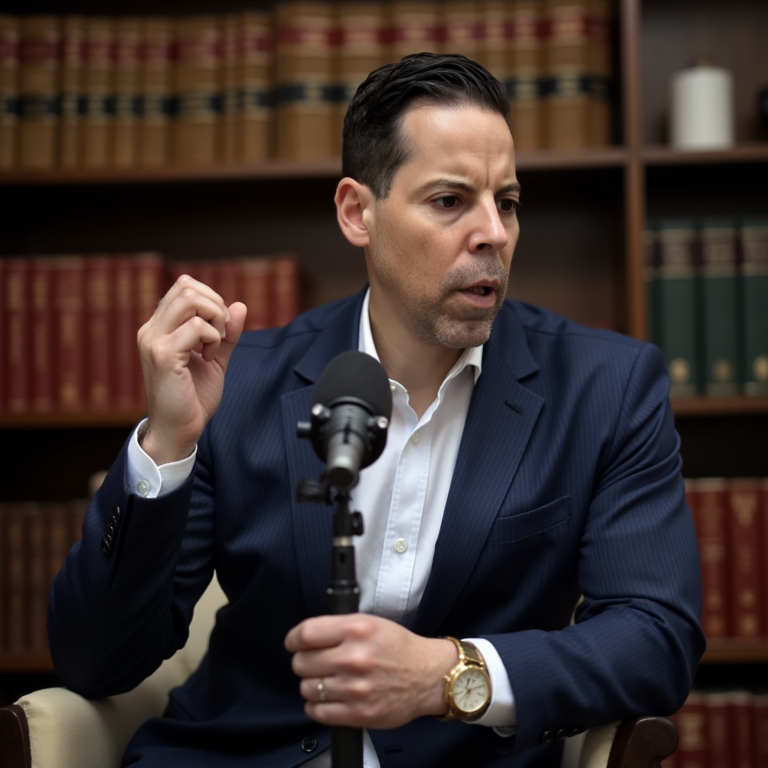
Gabriel Sandoval, Esq.
Owner
GS LAW, APC
Gabriel Sandoval is an immigration attorney with more than 10 years of experience helping individuals and families obtain legal permanent residence in the United States
Questions About Your Adjustment of Status Eligibility?
We’re here to help you understand your options and build the strongest case possible